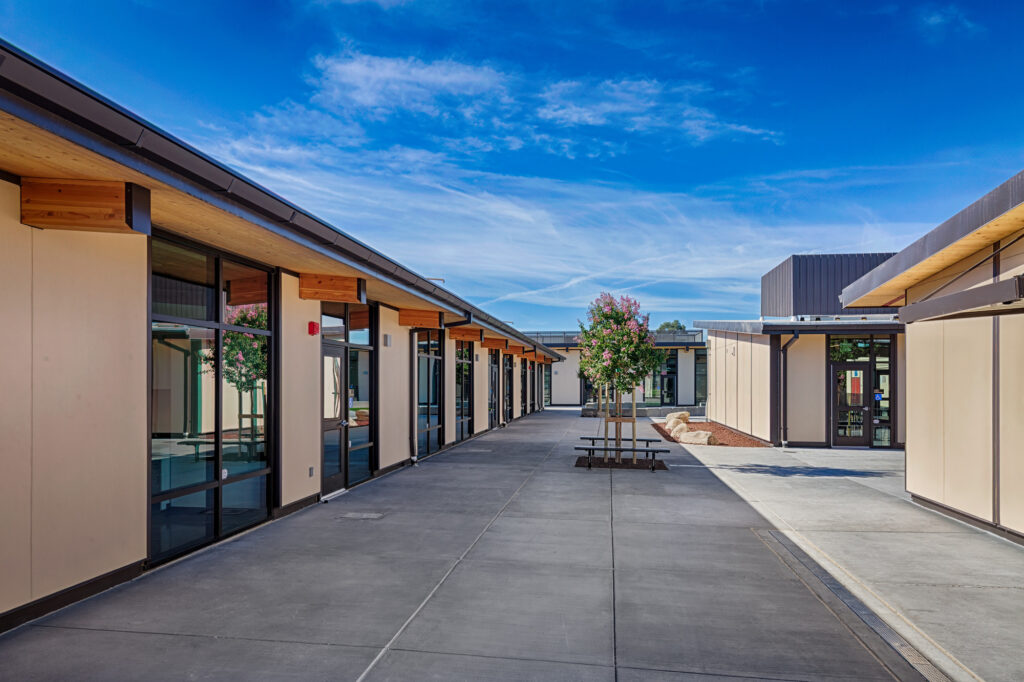
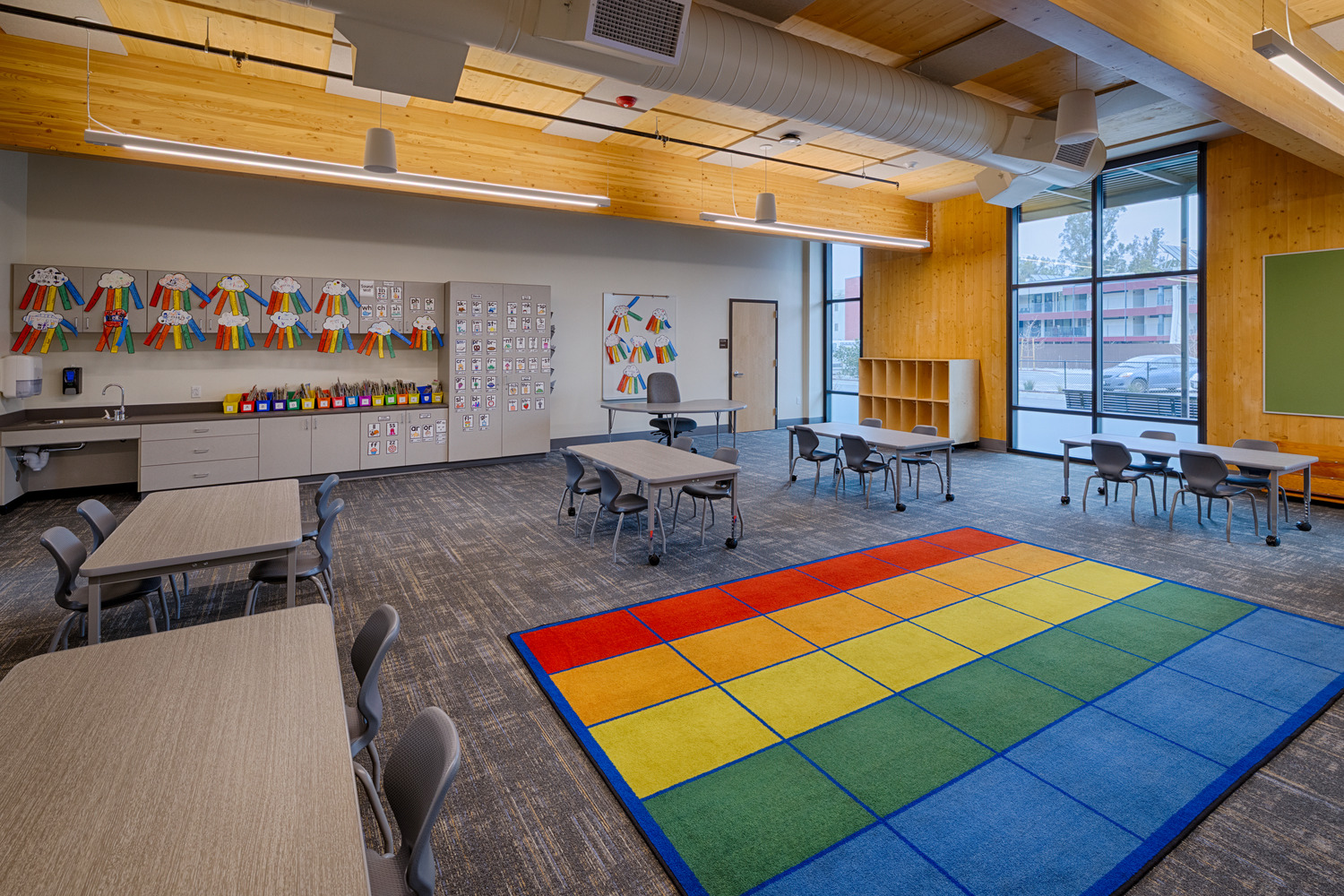
A school building is more than a place where education happens. It is an environment that influences how students learn, teachers work, and how an entire school community feels. Yet traditional construction decisions often focus heavily on the upfront cost of building, with less attention given to the long-term value of the learning environment itself.
TimberQuest takes a different approach. By incorporating biophilic design principles—including natural wood, daylight, outdoor views, and connection to nature, including smells—TimberQuest buildings create learning environments designed to support the people who use them every day.
The science behind biophilic design is compelling. Research increasingly demonstrates that our connection to nature can influence stress levels, cognitive performance, emotional well-being, and the overall learning experience. When those benefits are brought into schools, the potential financial return on investment extends well beyond the building itself.
Students learn best when they can focus, engage, and process information without unnecessary environmental stress. Natural elements and daylight, even the smell of organic materials, and nature-inspired design elements can help create more restorative learning environments.
A study at Green Street Academy in Baltimore found that sixth-grade students in a classroom enhanced with biophilic design elements experienced better stress recovery and achieved average test score gains more than three times higher than the previous year’s students in the same classroom.
Although TimberQuest hasn’t compared grades to pre-TimberQuest building grades, teachers at Hoover Elementary in Palo Alto reported,
“I have noticed a huge difference in student engagement,” another teacher said, “There’s definitely changes in student focus. They very much love the new setting, and are happy to be in that room to learn.”
At Bethel-Hanberry Elementary School in South Carolina, a school-wide biophilic design approach incorporated natural light, panoramic views, and nature-inspired architectural features. Following the first year of occupancy, math scores exceeded projected growth in every grade, while reading scores exceeded projected growth in grades 2–4.
A healthier, more welcoming learning environment can contribute to a stronger school experience. At Bethel-Hanberry Elementary, chronic absenteeism declined from 17.3% in the school’s previous building to 12.3% during its first year in the new facility.
That is a five-percentage-point decrease in chronic absenteeism. While a new building and other schoolwide factors may have contributed to the change, the findings offer an encouraging example of the potential impact of thoughtfully designed learning environments.
At Hoover Elementary, one TimberQuest teacher said,
“One of my students had a really hard time coming to school. And he’s now pumped to come to school every day and we’ve seen a big difference in him specifically.”
Students aren’t the only ones who benefit from better-designed schools. Teachers spend a significant portion of their lives inside school buildings, and their work environment matters.
At Bethel-Hanberry Elementary, teacher retention increased from 83.7% to 91.5% following the move into the new biophilic school.
At TimberQuest schools teachers have said,
“I hope that I’ll be able to stay in my classroom until I’m dead or done with teaching.”
A 5th Grade Teacher at Hoover Elementary. Every one of the 10 teachers we spoke with at three different TimberQuest schools said close to the same thing and their statements are below.
“I would 100% think twice about leaving. It’s hard to go from something like this to a different campus.”
“I can’t imagine leaving here. The vast majority of educators will go through their careers without seeing a significant remodel of the school. Nonetheless, getting to start a year and an absolute brand new top to bottom, never touched facility like this.”
Keeping experienced teachers can have a meaningful financial impact on districts. Recruiting, hiring, onboarding, and training replacement teachers all carry costs. Retaining even a handful of additional teachers can help districts avoid significant recurring expenses while maintaining continuity for students.
Natural materials, daylight, views, and connections to the outdoors can help create calmer environments. Research at Green Street Academy found improved physiological stress recovery among students in the biophilic classroom compared with students in a conventional classroom.
At a TimberQuest campus, a Special Education teacher said,
“I definitely have noticed a difference in lower stress for my students, which is huge because the majority of my students have diverse learning needs.”
The principal at one TimberQuest school said,
“It just feels really peaceful. You know, I know the students have made comments just about how bright it feels. And it feels like going camping. Sometimes I walk into the rooms and I see all the wood and the light and it just really promotes just a very peaceful atmosphere and environment and just creativity.”
For students, this means creating spaces that can help them feel more comfortable, focused, and ready to learn. For teachers and staff, it means spending the day in an environment designed to support well-being rather than simply accommodate occupancy.
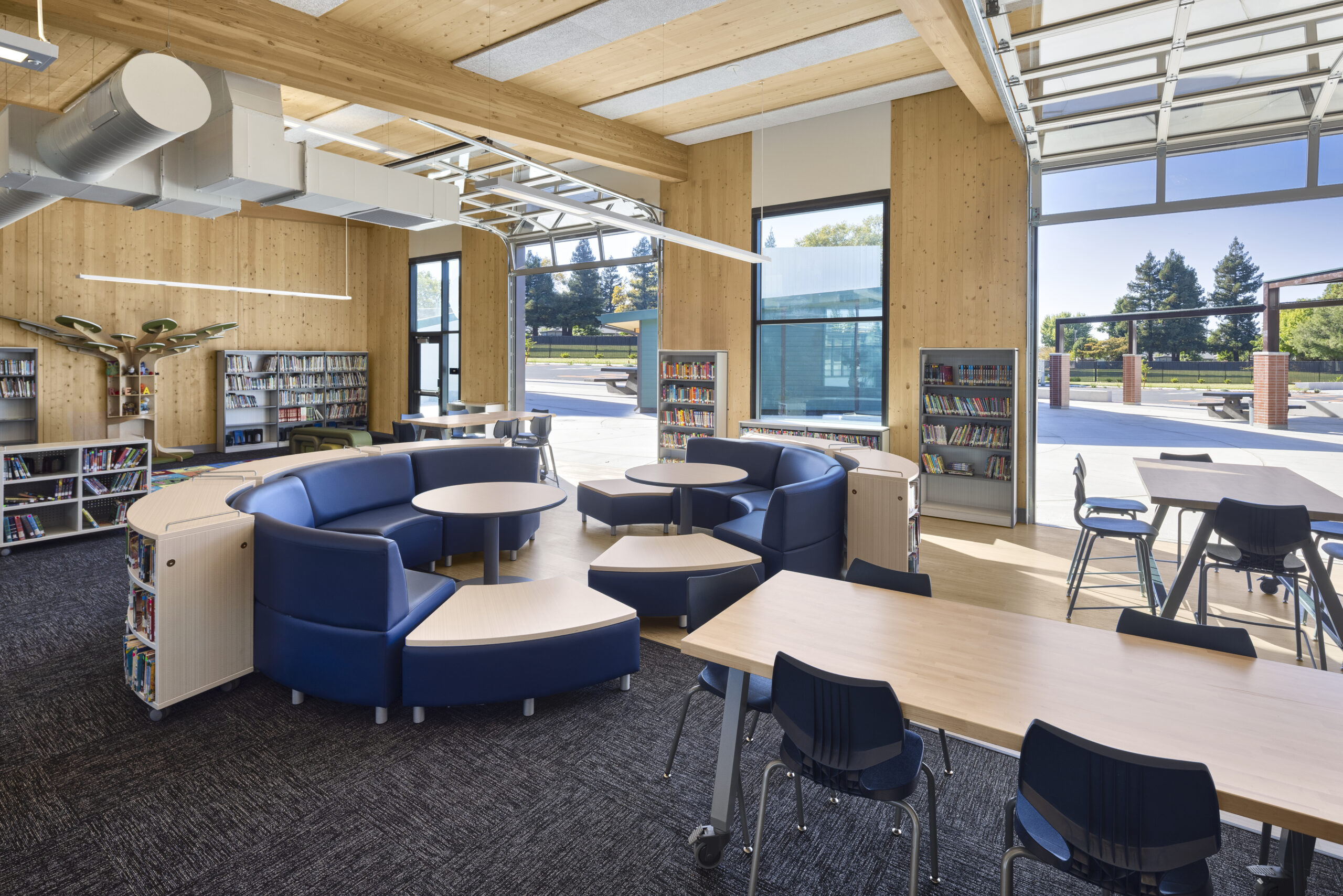
Educational improvements are important, but school districts also need to understand the financial implications. Better attendance, stronger teacher retention, and improved building performance can all contribute to a stronger long-term investment.
Teacher turnover is expensive. When a teacher leaves, districts face recruitment, hiring, onboarding, training, and the indirect costs of replacing an experienced educator. If a school environment helps retain even a small number of additional teachers, the district may avoid thousands of dollars in annual replacement expenses.
Consider the potential impact of improving teacher retention by just a few percentage points across a district. Those avoided replacement costs can accumulate year after year. Try the Biophilic ROI Calculator to see how much money your district could save.
Student absenteeism affects more than academic performance. In many school funding systems, attendance influences the revenue a district receives.If improved learning environments contribute to better attendance, districts may benefit from additional attendance-based funding while students benefit from more consistent instruction. Even modest improvements in attendance can add up across hundreds or thousands of students. The actual financial impact depends on the state and age of the kids and applicable attendance rules but you can test the Biophilic ROI Calculator to see the increase your school would have.
Teacher absenteeism also goes down with biophilic design so you have less substitute teacher costs, research shows that integrating natural elements cuts employee absenteeism by roughly 12% – 15% and reduces sick leave hours.
Building efficiency is another important part of the financial equation. TimberQuest incorporates all-electric heat pump systems, with energy performance designed to exceed California’s applicable Title 24 standards.Lower energy consumption can reduce operating expenses over the life of the building, freeing up district resources for educational priorities.
Daylighting can also reduce reliance on artificial lighting when properly designed and controlled, providing another opportunity for operational savings. Many teachers reported leaving the lights off more because they had plenty of daylight, because it provided a calming effect for different activities.
A building’s value is also determined by how easily it can be maintained and adapted over time. TimberQuest’s flexible MEP pathways provide opportunities to simplify access to building systems and accommodate future changes.
When maintenance and building modifications are easier to manage, districts have the potential to reduce labor, minimize disruption, and extend the useful life of their facilities.
Biophilic design is only one part of TimberQuest’s overall value proposition. The building system itself offers additional financial advantages before the first student enters the classroom.
A school building is a long-term investment. Its value shouldn’t be measured solely by the initial construction price, but by what it delivers throughout its useful life. Consider the combined potential of lower construction costs, accelerated delivery, reduced operating expenses, improved teacher retention, stronger attendance, and healthier learning environments. These benefits represent more than a construction decision. They represent an investment in the people who use the building every day. TimberQuest created a Biophilic Design ROI Calculator to help you uncover what benefits your district could reap, try it today!